Aller au contenu

Meilleures pratiques pour nourrir les oiseaux

An important part of welcoming birds to your outdoor space is to provide feeders and birdbaths safely. Here are our guidelines.  

Best Practices for Feeding Birds in North America 

Bird feeding is a rewarding way to connect with nature and enjoy birds right outside your window. However, like any place where wildlife gathers, feeders can contribute to the spread of disease among birds. A few simple practices can help keep your feeders safe and welcoming. 

To feed birds safely, we recommend taking the following general precautions to help reduce the presence and build-up of pathogens that make birds sick. 


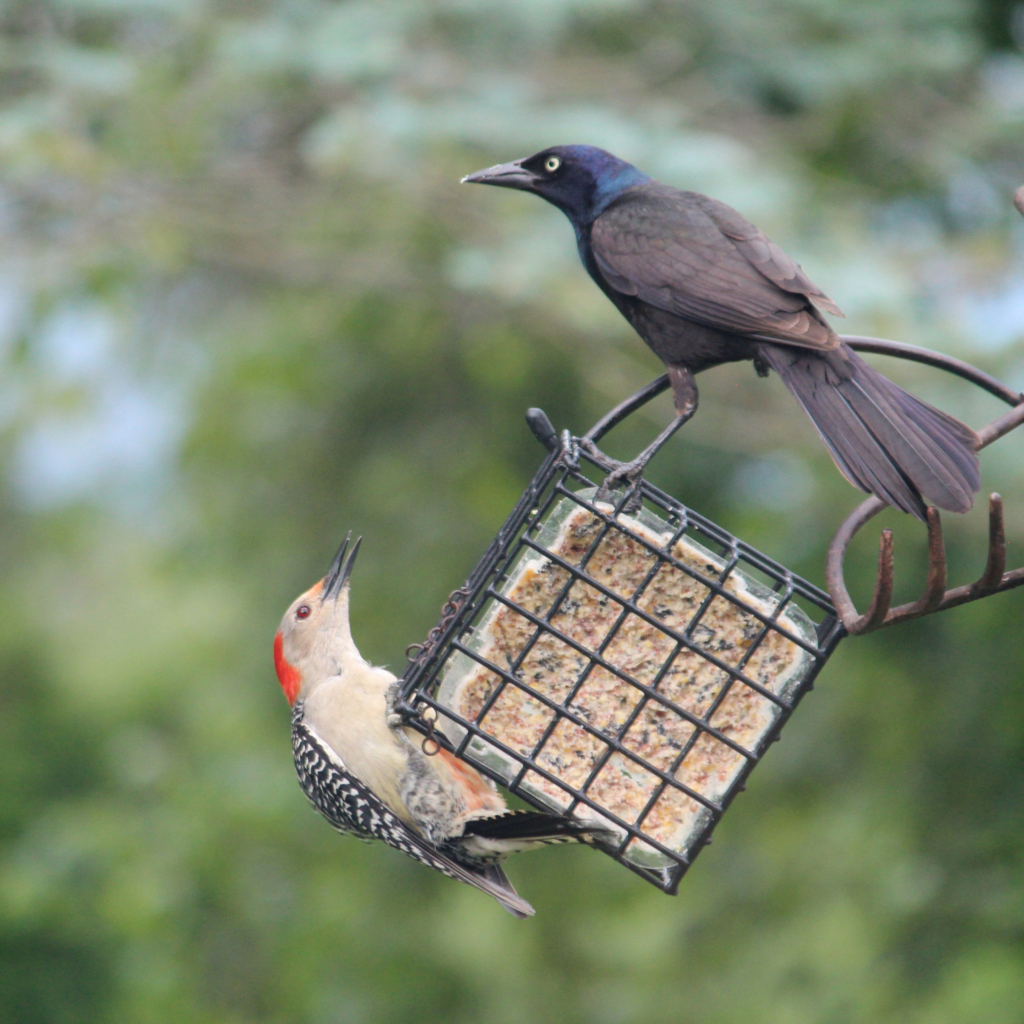
Un pic à ventre roux et un quiscale bronzé près d'une mangeoire à suif.

Clean your hummingbird or nectar feeders even more frequently 

  • Why: Mould and fungi readily grow in sugar water, particularly in warm temperatures. As such, hummingbird feeders need to be cleaned more often than seed or suet feeders – ideally every time you refill them.   
  • How often: Every couple of days, and more often during periods of heavy use or warm weather. If you see any sign of cloudy water or black mould, discard the solution and clean the feeder immediately. 
  • How to: Take it apart and wash the parts thoroughly with warm water and dish soap. Rinse thoroughly. 

Replace the water in your birdbath as often as possible  

  • How often: every couple of days.  

If you see any sign of cloudy water or mould growth or observe bird droppings, empty the bird bath and scrub it out. Scrub birdbaths weekly.  

Keep the ground below your feeders and birdbaths clean.  

  • Why: Accumulation of waste (e.g., bird droppings, mouldy or spoiled food) is unhealthy for birds and other wildlife like squirrels, and can attract unwanted guests like rats, raccoons, and neighbourhood cats.  
  • How to: Rake or sweep the ground below your feeder regularly. If possible, periodically rotate your feeders between different spots to limit the accumulation of waste in any one area.
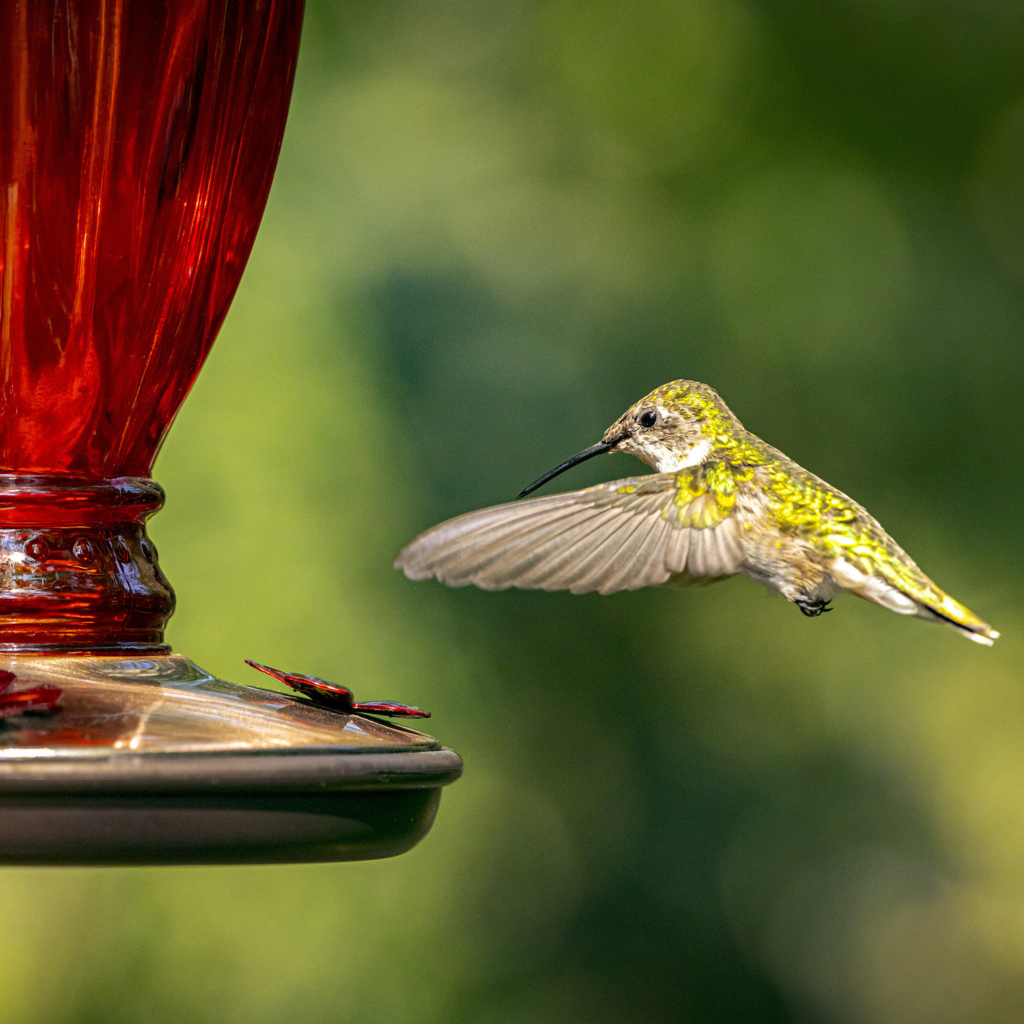
Un Colibri à gorge rubis s'approche d'une mangeoire à colibris.

Keep the ground below your feeders and birdbaths clean.  

  • Why: Accumulation of waste (e.g., bird droppings, mouldy or spoiled food) is unhealthy for birds and other wildlife like squirrels, and can attract unwanted guests like rats, raccoons, and neighbourhood cats.  
  • How to: Rake or sweep the ground below your feeder regularly. If possible, periodically rotate your feeders between different spots to limit the accumulation of waste in any one area.

Protect your health.  

We recommend wearing gloves whenever you handle feeders and wearing a mask when raking or sweeping under feeders or birdbaths. Take care to wash your hands thoroughly after cleaning or filling your feeders.

If you are unable to follow these best practices year-round, we recommend that you limit bird feeding to times of year when you are able to feed birds safely. Remember, bird feeders are not the only way – or even the best way – to feed birds. If feeder care feels like a lot, consider gardening for birds. Planting native plants is one of the best ways to support bird populations. Even if you only have space for a small container garden or window boxes, the plants you grow will provide shelter and shade for birds and sustain insect populations on which birds depend. 

How to Prevent Window Collisions 

If your feeders and bird baths need to be near a window, distance matters, and closer is better. Placement within 3 m/10 ft of a window means that a bird leaving the feeder can’t gain enough momentum to do harm if it strikes the window. 

  • Window Markings: You can prevent collisions by making windows visible to birds. Some options include applying markers, or tape spaced in a 5 x 5 cm (2 x 2 in) grid pattern or making DIY Acopian Bird Savers. Note that these solutions must be applied on the outside surface and provide high visual contrast to the glass in order to work. A great example of a product designed to prevent bird collisions with glass is Feather Friendly

Frequently Asked Questions about Feeding Birds

Putting Best Practices Into Action

Project FeederWatch

Make your feeder observations impactful by joining Project FeederWatch

Get more information

Learn more about creating a safe feeding environment and spotting sick birds and common diseases.

Choosing the Right Feeder and Seed

Now that you know how to safely feed birds, discover the best type of feeder and seed to attract your birds of interest!  

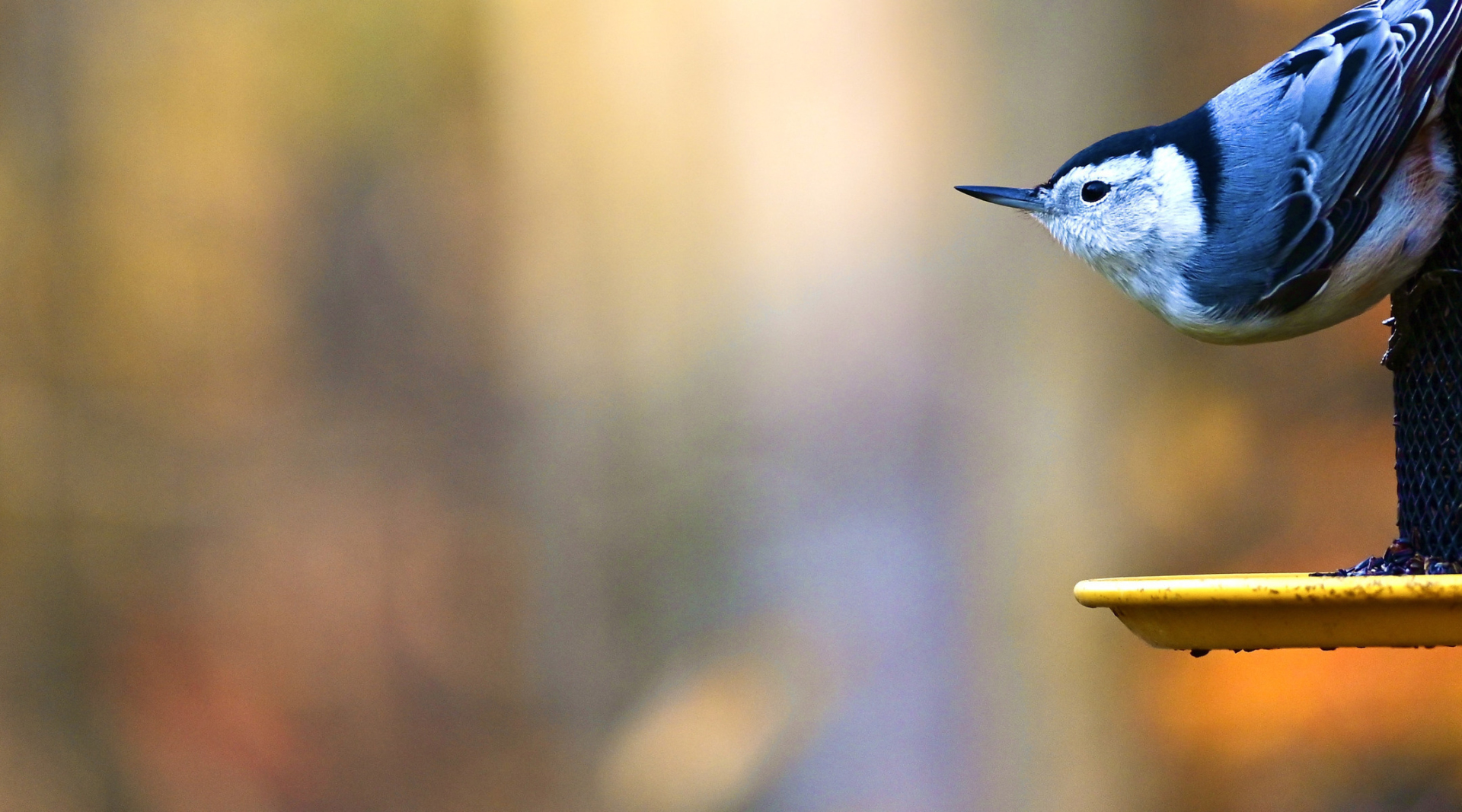
Une sittelle à poitrine blanche s'agrippe au bord d'une mangeoire remplie de graines.

Restez en contact avec Oiseaux Canada

Inscrivez-vous à l'infolettre d'Oiseaux Canada pour recevoir les derniers articles, les actualités scientifiques, les nouvelles sur la conservation et les occasions de vous impliquer.

Découvrez plus d'articles comme celui-ci

Tous les articles
Un participant à l'atelier observe une démonstration de baguage d'oiseaux.
21 juillet 2026

Une relation qui prend son envol : La Première Nation de Timiskaming

Pour être efficace, la conservation aviaire doit reposer sur de solides partenariats, et la relation croissante entre la Première Nation de Timiskaming (PNT) et Oiseaux Canada incarne ce principe.

Deux hirondelles bicolores en vol
8 juillet 2026

55 ans de suivi de l'Hirondelle bicolore révèlent les conséquences du déclin des populations d'insectes.

De nombreuses espèces d’oiseaux synchronisent leurs activités migratoires et de reproduction pour qu’elles coïncident avec l’émergence des insectes. Cependant, dans un contexte de changements climatiques, cette synchronisation parfaite se produit de moins en moins souvent. Une étude récente s’appuyant sur des données à long terme de l'Observatoire d'oiseaux de Long Point a démontré que les Hirondelles bicolores se reproduisent plus tôt à mesure que les températures augmentent au fil du temps.

Un oriole des vergers mâle chante depuis une branche d'arbre.
2 juillet 2026

Savoir s’adapter: La montée vers le nord de l’Oriole des vergers

Pour de nombreux passionnés d’ornithologie du sud du Canada, un signe indéniable de l’arrivée du printemps est un éclair orange vif qui jaillit parmi les arbres en bourgeons, accompagné de sifflements riches et mélodieux annonçant l’arrivée des Orioles de Baltimore. Il existe toutefois une espèce d’oriole moins connue et plus petite qui effectue le long voyage jusqu’aux lieux de nidification au Canada: l’Oriole des vergers.